Two wreckers look at the same car and quote $350 and $900. Neither is guessing. Each is pricing the car from a different set of numbers: how much metal it holds, which parts can be sold again, and what it costs to collect and strip it. Once you know how those numbers fit together, a quote stops being a mystery.
This guide from Sydney Car Wrecker breaks down how Scrap Car Prices are worked out, what pushes an offer up or down, and how to give a buyer enough detail for a quote that holds on pickup day.
The Three Layers Inside Every Quote
Every scrap offer is built from three layers. Some buyers only count the first one. That is usually why their price is lower.
| Layer | What it covers | Effect on your price |
| Metal value | Steel, aluminium and copper left after stripping | Sets the floor |
| Parts value | Engine, gearbox, panels, lights, wheels and the catalytic converter | Lifts the price above the floor |
| Handling costs | Towing, draining fluids, removing the battery and tyres | Comes off the total |
Put simply: metal value plus parts value, minus handling costs. A buyer who sells used parts can pay for the second layer. A buyer who only crushes cars cannot.
Layer One: Weight and the Scrap Value of Your Car
Every Scrap Value of Car estimate begins with weight. Heavier vehicles hold more steel, so a dual-cab ute will nearly always beat a small hatch on metal alone. Not all of that weight is metal, though. Fluids, tyres, glass, plastics and seat foam are removed first, and roughly two-thirds of a typical car is steel and iron.
How Much Does a Car Weigh? Common Sydney Examples
If you have ever wondered How Much Does a Car Weigh, these approximate kerb weights show why size matters so much on a scrap quote:
| Vehicle | Approx. kerb weight | Metal value |
| Toyota Corolla hatch | 1,300 kg | Lower |
| Mazda3 sedan | 1,350 kg | Lower |
| Toyota Camry | 1,550 kg | Medium |
| Holden Commodore (VE/VF) | 1,700 kg | Medium |
| Toyota HiAce van | 2,000 kg | Higher |
| Toyota HiLux or Ford Ranger dual cab | 2,100–2,250 kg | Higher |
Weights vary by year, engine and body style. Your registration papers or owner’s manual will show the exact figure.
Why Scrap Car Price per Kg Is Only a Starting Point
Searching for a Scrap Car Price per Kg figure feels like the fastest route to a fair number. In practice, a per-kilo rate only tells you the metal floor. It ignores every reusable part on the car, and it ignores the cost of getting the car off your property. A buyer who quotes on weight alone is pricing your car as a crushed block.
How Scrap Metal Prices in Sydney Move Your Offer
Steel is a global commodity. When demand from overseas mills drops, the Scrap Metal Prices Sydney yards pay fall too, and car offers follow within weeks. One national recycler’s published data put the average Australian scrap car at about $461 in August 2026, inside a 12-month band of roughly $430 to $540. That average covers basic end-of-life cars. A complete car with sellable parts can sit well above it.
The practical lesson: scrap car prices are tied to the market on the day the quote is given. Ask how long the price holds before you book.
Layer Two: Parts That Lift Your Scrap Car Value
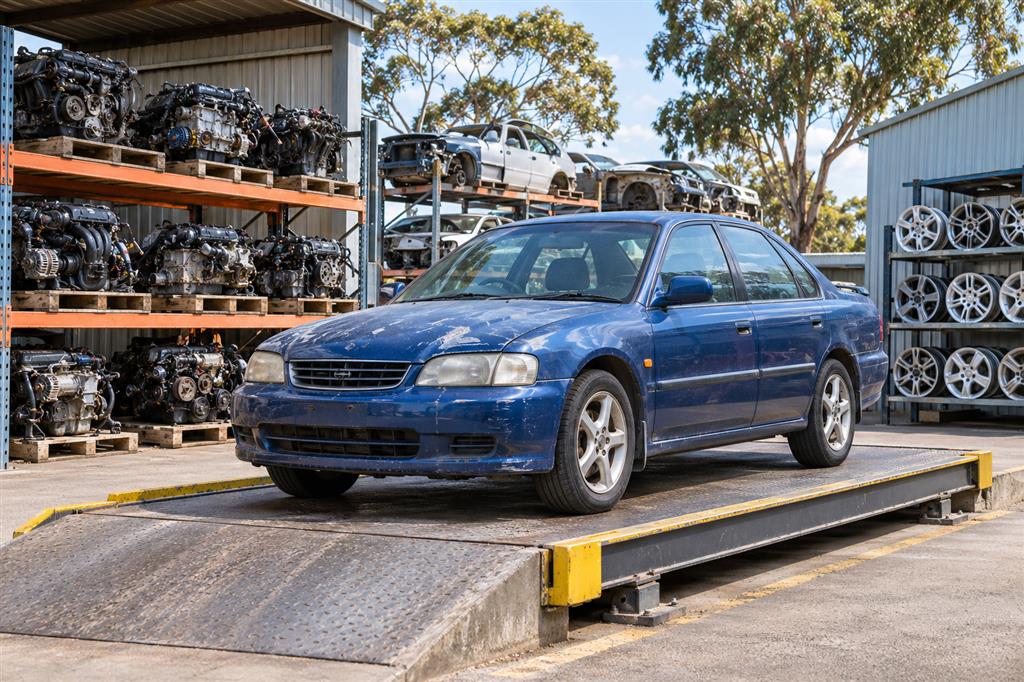
This is where your Scrap Car Value can jump. Wreckers that sell used parts look at what can go back on the road, not just what goes into the shredder. Parts from popular Sydney models move fastest, so a Corolla, HiLux or Ranger with a healthy engine is worth more than its weight suggests.
| Part | What a buyer checks | Why it matters |
| Engine | Does it turn over? Any knocking or overheating? | Often the most valuable single part |
| Gearbox | Does it shift? Any slipping? | High resale demand for common models |
| Catalytic converter | Is it fitted and original? | Contains precious metals |
| Body panels and lights | Straight, uncracked, no rust | Sold for repairs |
| Alloy wheels and tyres | Matching set, legal tread | Easy to resell |
Damage Type and Write-Off Status
How a car was damaged matters as much as how badly. Front-end accident damage often leaves the engine bay crushed but the rear panels, doors and interior saleable. Hail damage hurts the body but rarely touches the mechanicals. Write-off status changes the picture again. In NSW, a statutory write-off can never be registered again, so it is only worth its parts and metal. A repairable write-off can return to the road after inspection, which can make it worth more to the right buyer.
What Cuts an Offer
A missing catalytic converter, engine or gearbox
Removed wheels, so the car cannot be rolled onto the truck
Fire damage, which ruins most parts and wiring
Heavy rust in the floor or chassis
Flood damage that has reached the engine or electrics
Layer Three: Collection and Handling Costs
Before a car can be recycled, it has to be collected and made safe. Oil, coolant and fuel are drained. The battery comes out. Tyres are removed. Each step costs time and labour, and those costs are built into every quote, even when towing is advertised as free.
Access also matters. A car parked on the street is quick to load. A car with flat tyres at the back of a narrow driveway, or on a low basement level, needs more time and equipment. Mention it when you ask for a quote, so the price does not change when the driver arrives.
How Much Do Wreckers Pay for Cars?
The honest answer to How Much Do Wreckers Pay for Cars is that it depends on which layers a buyer can use. These are typical outcomes for different types of vehicle:
| Car type | Where the value comes from | Likely position |
| Old small hatch, not running | Mostly metal | Near the market average |
| Non-running sedan, parts intact | Metal plus engine and panels | Above average |
| Damaged SUV or 4WD | Weight plus mechanical parts | Well above average |
| Dual-cab ute or van | Weight plus high-demand parts | Among the highest |
| Stripped shell | Metal only, minus handling | Below average |
How Much Will a Wrecker Pay for My Car Compared to a Private Sale?
People asking How Much Will a Wrecker Pay for My Car often compare the offer with online listings. A running car with current rego will usually earn more from a private buyer, if you have time to advertise and handle inspections. A wrecker makes more sense when the car does not run, has failed a safety check, or needs repairs that cost more than it is worth.
How to Get a Quote That Holds on Pickup Day
Most price disputes start with a vague phone call. If you want to know How Much Do You Get for Scrapping a Car and keep that figure on pickup day, give the buyer these details up front:
Make, model, year and body type.
Whether it starts, drives and steers.
Any missing parts, especially the engine, gearbox or catalytic converter.
Damage type: accident, flood, fire, hail or rust.
Where it is parked and how the truck can reach it.
Four clear photos: front, rear, both sides and the engine bay.
Ask for the offer in writing, by text or email, with the conditions listed. Then compare the amount you actually receive, not the headline figure.
Paperwork That Protects the Price
Licensed buyers in NSW record the seller’s details and the vehicle identifiers. A dealer must not buy a car as scrap if its VIN, chassis or engine number is missing, so keep those markings intact. Have your licence and registration papers ready, and read our guide to the notice of disposal before the car leaves.
Getting a Scrap Car Price from Sydney Car Wrecker
We price cars on all three layers, because our St Marys yard sells used parts as well as recycled metal. That means a car with a good engine or clean panels is valued for more than its weight. We collect across Sydney, check the car against the details you gave, and confirm the final price before it is loaded.
Send your car’s details and photos to Sydney Car Wrecker at info@sydneycarwrecker.com.au, or call 0451 222 223 for a quote. Our yard is at 3 Warrior Place, St Marys NSW 2760.

