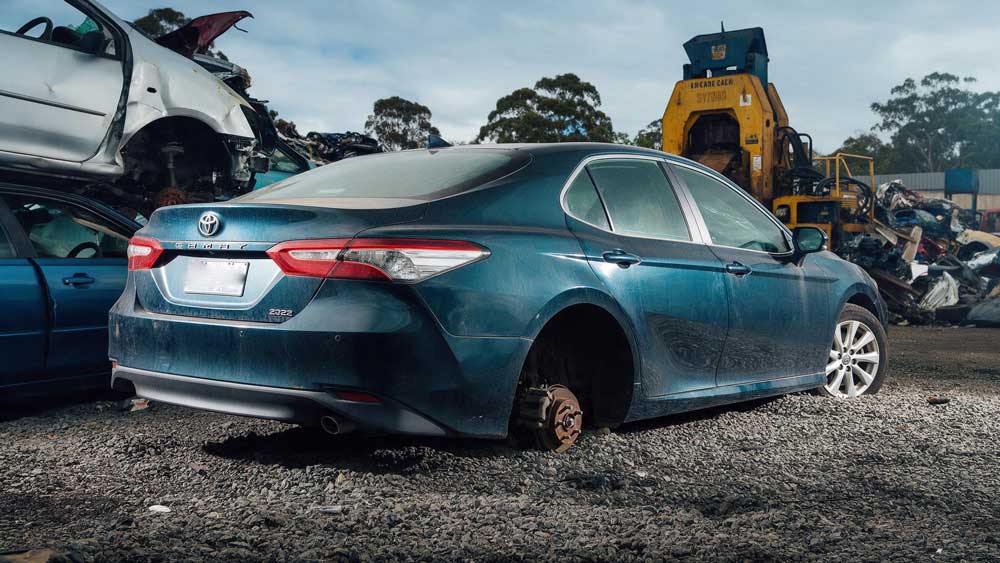
Yes, you can potentially sell a non-running car to a Sydney car wrecker. A vehicle does not necessarily become worthless simply because it will not start or cannot be driven. NSW Government guidance identifies an auto recycler or wrecker as an option for a vehicle that is no longer roadworthy or is in very poor condition. Depending on the operator and circumstances, pickup and removal may also be arranged.
For a non-running vehicle, however, the question is not only whether it can be sold. The buyer may also need to understand why it is not running, whether it can roll or steer, whether major components are still present, and how accessible it is for collection. If your car is sitting unused in a driveway, garage or car park and you are unsure whether repairing it is worthwhile, here is what to consider before requesting a quote.
A Non-Running Car Can Still Have Value
A non-running car can still retain value because drivability is only one part of its condition. Relevant factors can include:
- Age
- Make and model
- Overall condition
- Vehicle completeness
- Reusable components
- Recoverable materials
- Body and interior condition
- Demand for the model or its parts
- Location and collection requirements
For example, a complete car with a mechanical fault is different from a partially dismantled vehicle with major components missing. Both are non-running, but they are not necessarily equivalent from a buyer’s perspective.
Running vs Non-Running: What Changes?
| Factor | Running Car | Non-Running Car |
| Mobility | Moves under its own power | Collection requires planning |
| Mechanical condition | Easier to demonstrate | Fault may be known or uncertain |
| Buyer assessment | Whole-car usability may matter | Components and materials may matter more |
| Quote information | General condition | Fault, mobility and access become important |
| Collection | Usually simpler | Position and accessibility matter |
For a non-running car, mobility and accessibility become part of the selling process.
Common Reasons a Car May Not Be Running
Non-running describes the vehicle’s situation, not a specific mechanical diagnosis.
Possible causes include:
- Engine failure
- Long-term storage
- Transmission problems
- Accident-related problems
- Missing major components
- Fuel or starting-system faults
- Battery or electrical problems
You do not need to diagnose the fault yourself before requesting a quote.
If accident damage is the primary problem rather than ordinary mechanical failure, it should be assessed as a damaged vehicle. See our separate guide on Can You Sell a Damaged Car to a Sydney Car Wrecker?
Do You Need to Know Exactly What Is Wrong with the Car?
Not necessarily. If the vehicle has not been professionally diagnosed, it is better to describe what you know than guess at the cause.
Useful information could include:
- The battery appears flat.
- The engine does not start.
- The engine cranks but does not run.
- The vehicle starts but does not move.
- Major components have been removed.
- The car has been stationary for two years.
- A mechanic diagnosed an engine or transmission fault.
For example, avoid stating: The engine is completely dead.
if you do not actually know that.
A more accurate description would be:
The vehicle has not started for six months and the fault has not been professionally diagnosed. This distinction matters. An accurate description gives the buyer useful information without presenting an assumption as a fact.
What Affects the Value of a Non-Running Car?
The fault matters, but value depends on the vehicle as a whole. A buyer may consider:
- Make, model and age: Demand differs between vehicles.
- Completeness: A complete vehicle is different from one with major parts removed.
- Known mechanical condition: A minor known fault and major engine failure are different situations.
- Reusable components: Some components may retain value even when the complete car no longer runs.
- Body and interior condition: Mechanical failure does not necessarily mean the rest of the car is in poor condition.
- Recoverable materials: Metals and other vehicle materials may have recovery value.
- Location and accessibility: The practical requirements of collecting the vehicle may also matter.
When requesting a quote, describe the actual vehicle, not simply its make and model.
Should You Repair a Non-Running Car Before Selling It?
Not necessarily. Before paying for diagnosis or repairs purely to improve a sale, ask whether the likely increase in value justifies the cost, time and uncertainty. Repairing may deserve consideration when the fault is limited, the cost is reasonably predictable and the vehicle otherwise has good resale potential.
Selling the car in its current condition may deserve consideration when diagnosis or repairs are expensive, several faults exist, the vehicle has limited retail value or you do not want to invest more money before selling.
For example, paying for diagnosis, transport to a workshop and major mechanical repairs solely to make the car saleable may not make financial sense if the likely increase in value is limited. Before spending money purely for resale, consider obtaining an indication of what the vehicle may be worth in its current condition.
What Does a Wrecker Need to Know Before Collection?
A non-running vehicle cannot simply be treated as a car that will drive itself to the buyer. Its mobility, position and surroundings can affect collection planning.
Can the Car Roll and Steer?
A vehicle that does not start but rolls and steers presents a different situation from one with locked wheels, damaged steering or other mobility problems.
Where it is safe to check, determine whether the car:
- Rolls
- Steers
- Has all wheels fitted
- Has obviously locked or damaged wheels
If you cannot safely determine something, say that you do not know rather than attempting to move the vehicle yourself.
Are the Keys Available?
Keys may affect access, steering, gear selection and preparation for collection. If they are missing, tell the operator before booking pickup. Do not wait until collection day to mention missing keys or a locked vehicle.
Where Is the Vehicle Parked?
Tell the operator whether the car is located:
- Inside a garage
- In a narrow driveway
- On an open driveway
- In underground parking
- On accessible private property
- Behind another vehicle or obstacle
A car on an open driveway is a very different collection situation from one positioned inside a restricted parking area.
Is Access Restricted?
Mention anything that could affect access, including:
- Ramps
- Tight turns
- Narrow gates
- Walls or fences
- Other parked vehicles
- Limited maneuvering space
- Underground height restrictions
For underground parking in particular, provide details about entry height, ramps, turning space and the vehicle’s position. Do not assume that every type of collection equipment can access every location.
Example: Same Non-Running Car, Different Collection Problem
Consider two 2011 Mazda 3s.
Neither starts.
Car A has all four wheels fitted, rolls and steers, has its keys and is parked on an open driveway with clear street access.
Car B has a locked front wheel, no keys and is parked underground where the entrance has a height restriction and maneuvering space is limited.
Both owners could accurately say:
My Mazda 3 doesn’t run.
But that description is nowhere near enough to explain the collection situation. The second vehicle presents different practical requirements even though the make, model and basic mechanical status appear similar.
The lesson is simple:
For a non-running vehicle, describe its mobility and accessibility as well as its mechanical condition.
What Information Should You Provide When Requesting a Quote?
You do not need to write a mechanical report. You do need to provide enough accurate information for the buyer to understand what they are assessing.
Have these details ready:
- Year
- Vehicle location
- Make and model
- Registration status
- Known fault, if any
- Whether the engine starts
- Whether keys are available
- Major missing components
- Whether all wheels are fitted
- Whether the car rolls and steers
- Parking position and access restrictions
- Approximate time the vehicle has been stationary
Instead of:
My Mazda doesn’t work. How much?
a useful description would be:
2012 Mazda 3 in Parramatta. The engine does not start. It rolls and steers, all four wheels are fitted, the keys are available, and the vehicle is on an open driveway with clear street access. That tells the buyer considerably more about both the vehicle and the potential collection.
What If the Car Has Been Sitting for Years?
A car that has been stationary for a long time may have issues beyond the original reason it stopped running.
Before requesting collection, check what you can safely observe:
- Is it still accessible?
- Are the keys available?
- Does it appear able to roll?
- How long has it been stationary?
- Are the wheels and tires present?
- Have major components been removed?
Long-term storage does not automatically mean a vehicle has no value. At the same time, do not attempt unsafe repairs or vehicle movement simply to prepare it for collection. If you cannot safely check something, tell the operator what you know and what remains uncertain.
What If the Non-Running Car Is Unregistered?
Registration status and mechanical condition are separate issues. Tell the buyer if the vehicle is unregistered, and make sure the applicable NSW disposal requirements are addressed when the sale is completed.
For detailed information about identification, registration documents, number plates and NSW disposal paperwork, see What Documents Do You Need to Sell a Car for Scrap in NSW?
How to Sell a Non-Running Car to a Sydney Car Wrecker: 7 Steps
Step 1: Describe the Problem
Explain what the car does or does not do. Provide a confirmed diagnosis if you have one; otherwise describe the symptoms.
Step 2: Check Its Mobility
Where safe, determine whether the car rolls and steers, whether the wheels are fitted and whether the keys are available.
Step 3: Check the Access
Identify gates, garages, ramps, underground height limits, narrow spaces or obstacles that could affect collection.
Step 4: Gather the Vehicle Details
Have the make, model, year, location, registration status and known condition ready.
Step 5: Request and Clarify the Quote
Provide accurate information about the fault, mobility, missing components and access. Make sure you understand the conditions attached to the offer.
Step 6: Confirm Collection Arrangements
Make sure the planned collection reflects the vehicle’s actual condition and location.
Step 7: Prepare for Handover
Remove personal belongings and private information, prepare the available keys and relevant documents, and complete the applicable transaction and NSW disposal requirements.
5 Mistakes to Avoid When Selling a Non-Running Car
- Guessing the diagnosis. Describe symptoms when you do not know the cause.
- Hiding known problems. Accurate information reduces the risk of misunderstandings.
- Forgetting mobility or access issues. A locked wheel or restricted garage can matter to collection.
- Spending heavily on repairs without considering the likely return.
- Waiting until collection day to disclose missing keys, obstacles or other important details.
Frequently Asked Questions
Sell Your Non-Running Car with Sydney Car Wrecker
A non-running car should be described by more than whether its engine starts. Before requesting a quote, have the vehicle’s make, model, year, location and known condition ready. Also explain whether it rolls and steers, whether the wheels and keys are available, and where the vehicle is parked.
Providing these details from the beginning can make it easier to assess the vehicle and discuss suitable collection arrangements. If you want to discuss selling a non-running vehicle in Sydney, contact Sydney Car Wrecker with accurate details about the car and its location.
- Sydney Car Wrecker
- Phone: 0451 222 223
- Email: info@sydneycarwrecker.com.au
- Address: 3 Warrior Place, St Marys NSW 2760